
The Government’s Arm in Stella Mons: Ester Fenoll’s Link Raises Questions Over the Association’s Independence
The Secretary-General of the Government is linked to the Catholic association as Andorra prepares a reform of its Criminal Code on abortion


Andorra is preparing to face a historic reform of its Criminal Code this September, with the Government of Xavier Espot seeking to decriminalise abortion.
However, the bill that will reach the General Council will be considerably more limited than the proposals initially discussed during the previous legislature.
The Executive plans to amend the Criminal Code to remove criminal liability for women who voluntarily terminate a pregnancy, without turning abortion into a legal healthcare service in Andorra.
The process has been shaped in recent years by talks with the Holy See and by the search for a formula that would allow Andorra to move towards decriminalisation without triggering an institutional conflict within the Co-Principality.
Against this backdrop, the growing public presence of Stella Mons, an association of Catholic women, introduces an additional element into the debate.
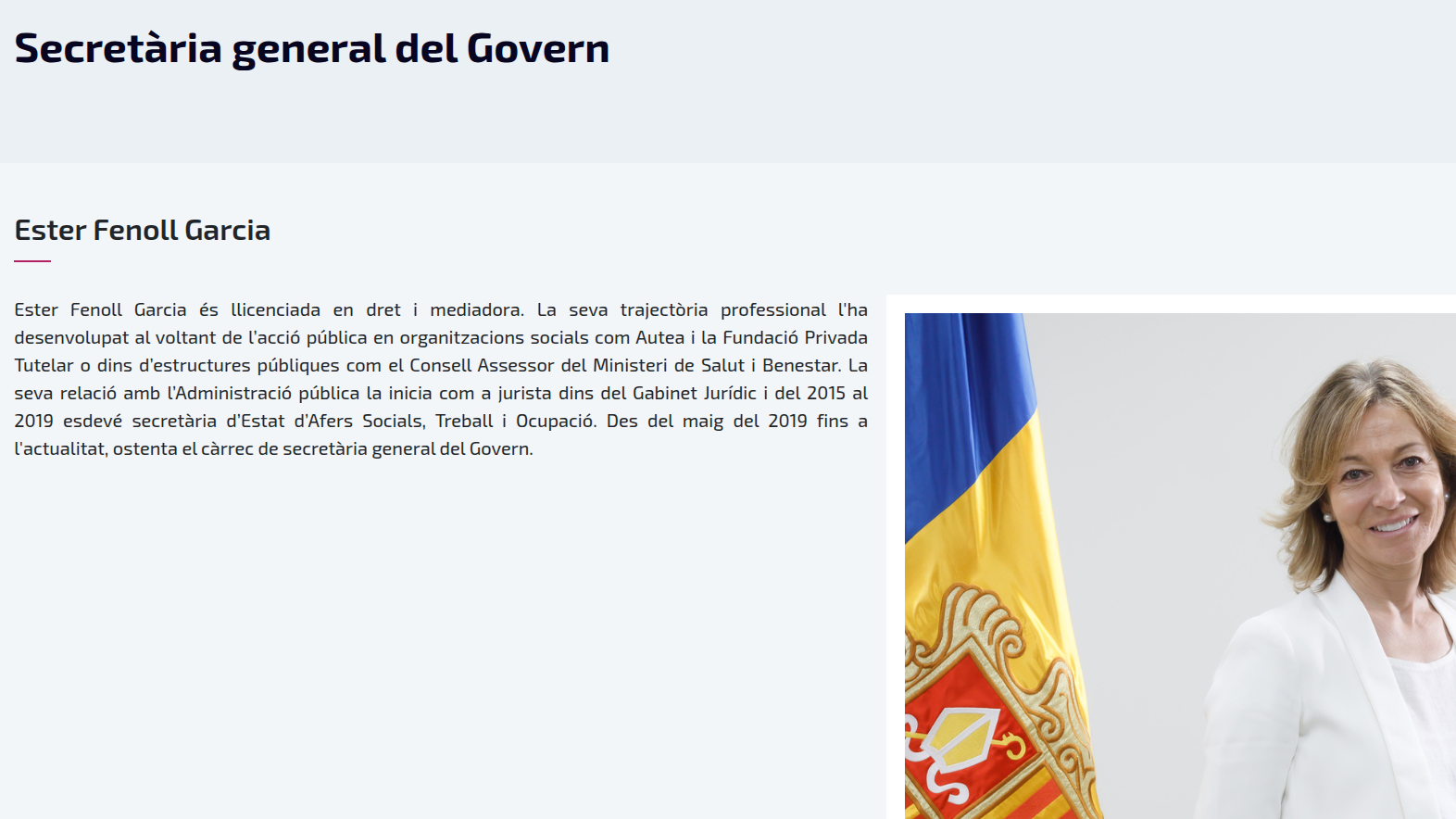
One of the people linked to the organisation is Ester Fenoll, the current Secretary-General of the Government of Andorra and former Secretary of State.
From an ambitious proposal to minimal decriminalisation
The abortion debate began taking shape during the previous legislature with the creation of the SIAD and an intense period of contacts with the Holy See.
The initial proposal did not envisage women being able to have abortions in Andorra. Instead, the objective was to establish mechanisms to refer women abroad, explore formulas through which the CASS could cover part of the cost and guarantee subsequent medical follow-up.
The initiative sought to find a balance between women's rights, the country's social reality and Andorra's unique institutional structure, with two Co-Princes and a direct connection between the Episcopal Co-Prince and the Holy See.
The reform now being prepared by the Government is substantially more limited. The proposed formula would remove women from the scope of criminal liability without establishing abortion as a healthcare service within the Principality.
The process also involved Federico de Montalvo, a professor specialising in bioethics, who participated in drafting the legal proposal that the Executive intended to bring into the political debate.
The bill was originally expected to reach the General Council earlier, but the lack of a definitive agreement and changes within the Holy See ultimately delayed its presentation.
The death of Pope Francis and the arrival of Pope Leo XIV also opened a new chapter in relations between Andorra and the Vatican. During these months, Xavier Espot and the Minister of Institutional Relations, Ladislau Baró, have held several meetings with Holy See officials, including Vatican Secretary of State Pietro Parolin.
Espot has maintained that the reform does not formally require the Vatican's approval. However, the course of the negotiations shows that the position of the Holy See has been one of the factors influencing the limits of the reform.
Stella Mons gains prominence amid the abortion debate
It is in this context that Stella Mons has gained greater visibility in the public debate over abortion.
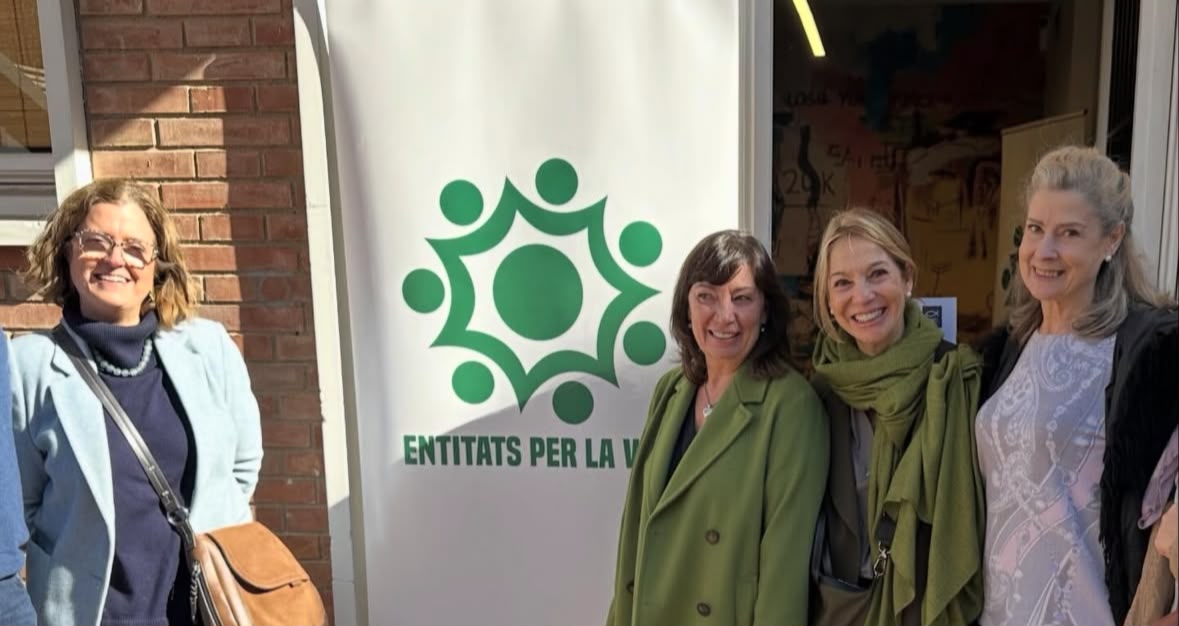
The association has presented itself in recent months as one of the voices within the Catholic sector defending a particular conception of the protection of life and warning about the potential consequences of changing Andorran legislation.
However, there is a connection that adds a political dimension to the debate: Ester Fenoll, the current Secretary-General of the Government, is linked to Stella Mons.
Fenoll currently holds a senior position within Xavier Espot's Executive. As Secretary-General, she is part of the Government's closest leadership structure.
This connection does not establish that Stella Mons acts on instructions from the Executive, nor that its positions are dictated by the Government. There is also no evidence demonstrating coordination between the two.
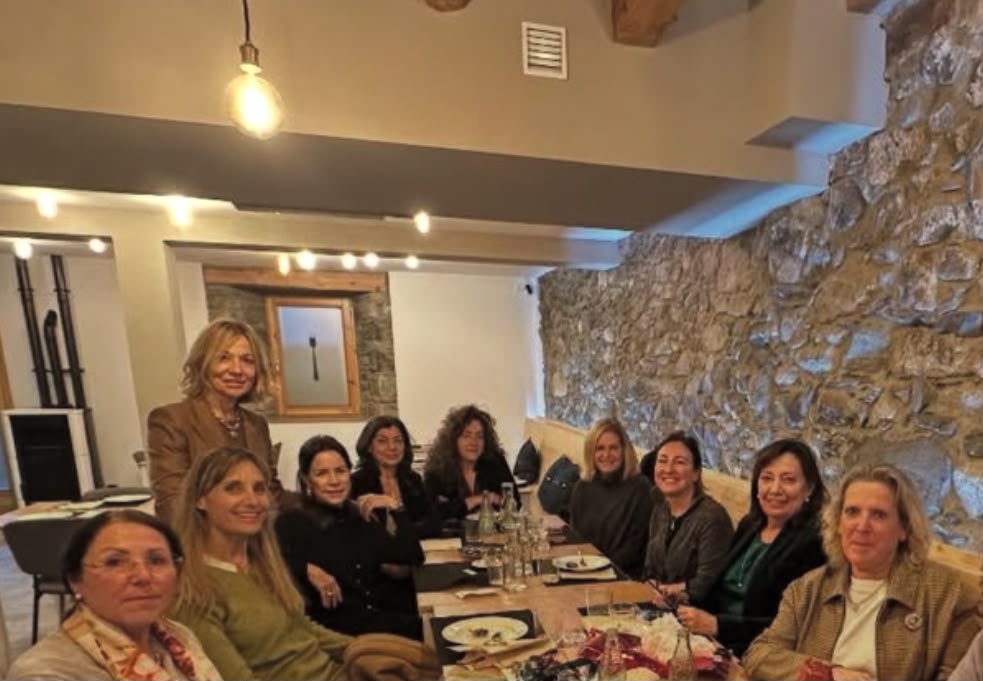
What does exist is a direct link between an organisation that has gained visibility in the abortion debate and a person holding one of the highest-ranking positions within the Andorran administration.
A shift in discourse that raises questions
The issue becomes more significant given the evolution of the debate over recent years.
During the early stages, Catholic sectors strongly opposed to any amendment to the Criminal Code warned that decriminalisation could put Andorra's institutional system at risk, particularly the Co-Principality.
The argument was that such a reform could trigger a conflict with the Episcopal Co-Prince and alter the balance on which the Principality's institutional model is based.
The current situation is different. The Government is defending a formula that would remove women from the Criminal Code without establishing abortion as a healthcare right that can be exercised in Andorra.
This position does not fully satisfy the most conservative Catholic sectors either. They argue that removing criminal penalties for women could become a first step towards further liberalisation and eventually the implementation of the so-called three grounds.
At the other end of the spectrum, feminist organisations consider the proposal insufficient, arguing that decriminalisation does not amount to guaranteeing an effective right to abortion.
A middle ground that leaves everyone dissatisfied
Espot's Government has ultimately positioned itself somewhere in the middle.
It is not proposing to leave the current legislation untouched, but neither is it proposing to legalise abortion in Andorra. The formula would remove women from the criminal sphere while keeping abortion itself outside the Andorran healthcare system.
For feminist organisations, the change is insufficient.
For sectors most opposed to the reform, it goes too far.
It is precisely in this middle ground that Stella Mons has gained visibility. Ester Fenoll's presence within the association raises a question that deserves scrutiny: to what extent does the organisation's discourse represent an independent Catholic voice, and to what extent could it contribute, directly or indirectly, to shaping a narrative compatible with the reform being prepared by the Government?
This is not to claim that there is coordination between Stella Mons and the Executive without evidence to support such an assertion. The relevant fact is the connection between an association participating in the public debate and a senior Government official who is linked to it.
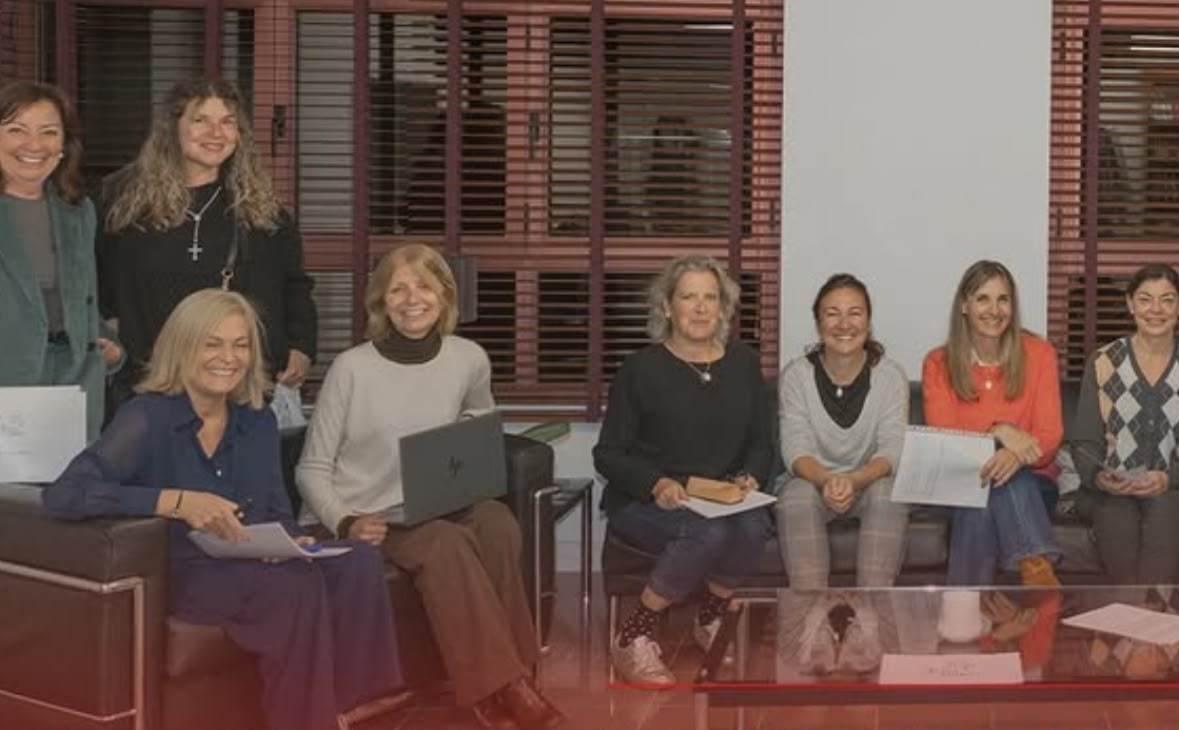
That connection takes on particular importance at a time when the Executive needs to explain a reform it intends to present as historic, while at the same time avoiding the legalisation of abortion within the Principality.
The role of public television and the new Catholic narrative
Stella Mons' growing media presence has also raised questions about the role the association is acquiring in shaping the public narrative around abortion.
Its appearances in different media outlets, including public television, have helped give visibility to a particular Catholic perspective at an especially sensitive moment.
For sectors critical of the Government, this situation could create the perception that the debate is being framed around two apparently opposing positions —one highly conservative and the other more reformist— while the Executive's final proposal sits precisely between them.
In any case, the issue should be assessed on the basis of facts rather than interpretations.
What is clear is that the reform expected this September will be very different from the initial proposal, which envisaged mechanisms for referring women abroad and exploring ways for the CASS to participate in their healthcare follow-up.
After months of negotiations with the Holy See, changes in the Vatican leadership and a process marked by the need for discretion, Andorra is finally facing a minimal reform: removing women from the Criminal Code without legalising abortion in the Principality.
And amid this process, the connection between Stella Mons and Ester Fenoll, the Government's Secretary-General and former Secretary of State, introduces an element that has received little attention until now in the public debate over how the new Catholic narrative surrounding the reform is being shaped.
Add new comment
Related news


