
Andorra and the Vatican Reach Deal to Decriminalize Women Who Have Abortions
The Episcopal Co-Prince Will Not Sign the Law, Although the Text Is Said to Have Been Agreed with the Vatican


As La Veu Lliure reported a year ago, Andorra and the Vatican have reached an agreement to decriminalize women who have abortions, according to sources familiar with the negotiations.
The agreement, reached after several contacts between the Government and the Secretary of State of the Holy See, Cardinal Pietro Parolin, will allow Xavier Espot’s Government to present the text to the General Council during October.
The formula agreed between the two sides would represent a very limited form of decriminalization. Women would no longer face criminal liability under Article 108.2 of the Penal Code for having an abortion, but doctors and other healthcare professionals involved would remain exposed to criminal responsibility.
The Andorran Social Security Fund, CASS, would also not cover abortion-related care.
Negotiations shaped by the Vatican’s red lines
Sources close to the minister responsible for the negotiations, Ladislau Baró, said that the Government had understood from the outset that it could not cross any red lines or approve measures that were not accepted by the Holy See.
According to these sources, the Executive accepted that any progress on decriminalization had to respect Andorra’s institutional system and receive the Vatican’s approval.
The negotiations would therefore have focused on finding a formula that allowed the Government to partially fulfil its electoral programme without provoking a crisis with the Bishop of Urgell, who is also Andorra’s Episcopal Co-Prince.
After several contacts with Parolin, the solution reportedly accepted by both sides was to decriminalize the woman while excluding doctors from the reform and ruling out public funding for abortion.
The Vatican reportedly delayed the law
The Holy See would also have managed to delay the presentation of the bill for several months.
The Executive had initially indicated that the text could reach the General Council in November last year. However, November ended without the proposal being formally registered.
The delay allowed negotiations with the Vatican to continue and gave both sides more time to agree on wording that would be acceptable to the Government and the Holy See.
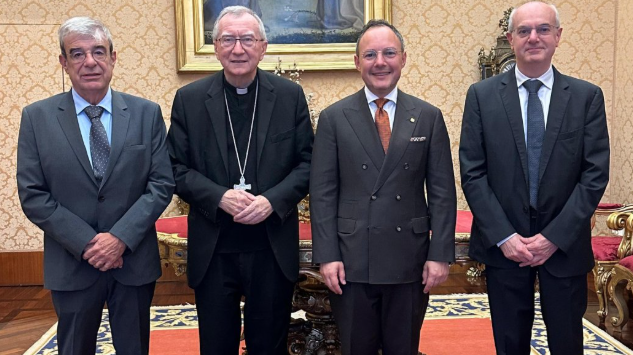
The last known meeting between Xavier Espot, Ladislau Baró and Cardinal Pietro Parolin reportedly took place at the Vatican at the end of July, when the final details of the agreement were settled.
A month before that meeting, on June 11, Espot held a brief conversation with Pope Leo XIV during the Pontiff’s visit to Barcelona.
The exchange was protocol-related, but Espot used the opportunity to reiterate his invitation for the Pope to visit Andorra and explain the Principality’s particular institutional system.
From that point onwards, the Government stopped referring to a complete decriminalization of abortion and began speaking instead of a proposal that would protect only the woman. According to the sources consulted, this change in approach would have been the direct result of the negotiations with the Holy See.
A bare-minimum law to salvage Espot’s position
The agreement would allow the Government to present the reform as a partial fulfilment of its electoral programme: preventing Andorran women from facing criminal prosecution for having an abortion.
However, no woman has ever been prosecuted in Andorra for this offence, and the applicable penalty is arrest rather than imprisonment. In 2024, 143 women residing in Catalonia underwent abortions without facing legal consequences.
The text would not recognise a full right to abortion and would not guarantee public healthcare for the procedure within the Principality.
Women would be protected from a possible criminal conviction, but healthcare professionals would remain subject to the restrictions established by the Penal Code. The CASS would also continue to exclude abortion-related care from its coverage.
From complete decriminalization to the agreed formula
The proposal studied during 2025 was initially broader. It contemplated decriminalizing both the woman and the healthcare professional involved, as well as introducing some form of coverage through the CASS.
The announcement made at the time by Ladislau Baró triggered a reaction from the Holy See and ended the discretion with which Espot’s Government had conducted the negotiations since 2019.
The project subsequently stalled, and the talks continued for approximately one year.
According to information previously revealed by La Veu Lliure, Pope Francis had reportedly approved the formula initially under consideration. His death and the subsequent change in the Vatican’s leadership, in a context in which conservative positions gained greater influence, would later alter the situation.
Pope Leo XIV subsequently questioned whether governments should finance cross-border journeys for abortions and defended the need to support and accompany women facing such circumstances.
During his visit to Andorra, French President Emmanuel Macron also called on the country to decriminalize abortion and address the issue with courage.
Parolin reportedly finalised the agreement with the Government
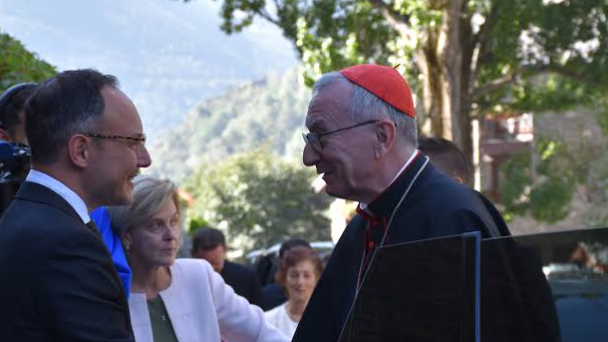
Cardinal Pietro Parolin, with the approval of the Holy Father, would have been the Vatican’s main interlocutor throughout the negotiations.
The agreed formula would allow the Holy See to accept that women are no longer criminally penalized for having abortions, while maintaining the criminal liability of doctors and excluding any CASS coverage.
The bill prepared by the Executive is expected to reach the General Council during October, where it will have to go through the corresponding parliamentary procedure.
The proposal is likely to reopen the debate among political parties, feminist organisations, healthcare professionals and groups defending Andorra’s current institutional system.
According to information obtained by this newspaper, several international pro-life organisations would be coordinating demonstrations and protests in Rome to denounce the agreement between the Government of Andorra and the Holy See and express their opposition to the decriminalization of abortion.
The Episcopal Co-Prince will not sign the law
Vatican sources have confirmed to La Veu Lliure that one of the terms of the negotiation is that, although the Holy See would have agreed on the details of the law with the Government, the Episcopal Co-Prince, Josep-Lluís Serrano i Pentinat, will not sign it.
According to these sources, the decision would seek to protect the image of the Church and remain consistent with the principle of dominium vitae.
The previous Episcopal Co-Prince, Joan-Enric Vives, also chose not to sign the Assisted Reproduction Law and other legislation in the past in order to avoid provoking an institutional conflict.
In this way, the Vatican would have accepted the limited decriminalization of women who have abortions. One of the key terms of the agreement between the Vatican and the Government is that its representative in Andorra, the Episcopal Co-Prince, will not sign the law.
Comments
Al final tot es una pose, ni…
Al final tot es una pose, ni la mitra marxarà ni els nostres politics homosexuals volen que es pugui avortar
Tot aquesta tensio…
Tot aquesta tensio isntitucional per 4 boges que no saben que existeix el SIAD, serem republica per culpa de DA
Quina tristesa contemplar la…
Quina tristesa contemplar la distància entre l’Església dels màrtirs i l’Església de la diplomàcia política! Els papes sant Silveri i sant Martí I van preferir la persecució, la presó, el desterrament i la mort abans que sotmetre les seves conviccions al poder dels governants. Avui, en canvi, la Santa Seu sembla disposada a negociar principis morals fonamentals per conservar el poder temporal del coprincipat andorrà.
Aquells sants pontífexs van sacrificar el poder per defensar la fe. Avui sembla que es corre el risc de sacrificar la coherència amb la fe per conservar el poder.
L’Església dels màrtirs no negociava les seves conviccions per conservar un tron.
Monsenyor Serrano, vostè,…
Monsenyor Serrano, vostè, format en la diplomàcia vaticana i arribat a Andorra des de Roma, hauria de recordar que la grandesa de l’Església no es troba en la seva habilitat per negociar amb els governants, sinó en la fermesa per defensar els seus principis.
Els papes sant Silveri i sant Martí I van patir la persecució, l’empresonament, el desterrament i la mort per negar-se a sotmetre la seva autoritat espiritual al poder polític. No van sacrificar les seves conviccions per conservar el poder temporal.
Avui, davant les negociacions sobre la despenalització de l’avortament a Andorra, cal preguntar-se si la diplomàcia vaticana no està anteposant la preservació del coprincipat a la coherència amb la doctrina que proclama.
Monsenyor Serrano, la història no recordarà els equilibris diplomàtics, sinó la fidelitat als principis. Sant Silveri i sant Martí I van preferir perdre el poder abans que sotmetre la seva consciència. ¿Està vostè disposat a fer el mateix?
Add new comment
Related news


Era el mínim. Tot i que basant-se en la protecció de la vida també podrien haver agafat els casos en que la mare corre perill de mort, que són casos comptats, però hi ha la possibilitat en alguns casos concrets.