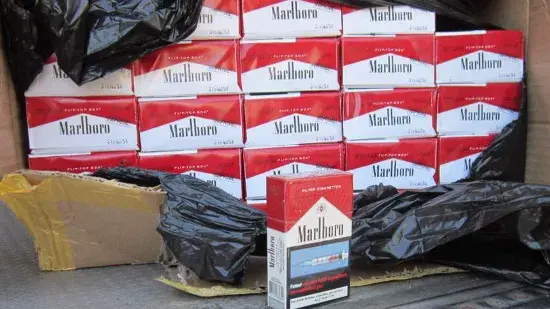
La Seu d’Urgell drug trafficking investigation leads to more than 30 years in prison and €4 million in fines
Nine men have been convicted for operating a sophisticated drug distribution network that concealed shipments of hashish, marijuana and cocaine


A routine police interception in the Pyrenean town of la Seu d’Urgell has brought down a sophisticated drug trafficking network whose operations stretched across Spain and reached into international markets.
Five years after the seizure that helped expose the organisation, nine men have been sentenced to a combined total of more than 30 years in prison and €4.05 million in fines.
The ruling, delivered by the Provincial Court of Lleida, concludes a criminal investigation conducted by the Court of La Seu d’Urgell.
At its centre was an organisation that turned the ordinary machinery of commercial logistics into a discreet channel for transporting substantial quantities of hashish, marijuana and cocaine.
The network operated between at least November 2021 and March 2023, drawing on transport companies, industrial warehouses and commercial vehicles to move illegal consignments under the cover of legitimate deliveries.
Its members lived across the Catalan provinces of Lleida, Barcelona and Tarragona, but their activities extended far beyond the region. Investigators traced movements to Castellón, Ibiza, Zaragoza, Málaga, Cádiz and Pontevedra, as well as indications of international operations.
A criminal enterprise hidden behind legitimate deliveries
The organisation's strength lay not merely in the volume of drugs it transported, but in the precision with which it divided responsibility.
According to the judgment, reported by the Catalan News Agency (ACN), the network's leader administered two transport companies subcontracted by Correos Express, giving him access to commercial vehicles and logistical infrastructure that could be used to disguise illegal shipments.
From this position, he coordinated the acquisition and distribution of narcotics while trusted associates oversaw transport arrangements, surveillance and the recruitment of collaborators.
Other members drove escort vehicles, monitored routes or maintained the companies' legitimate commercial operations. An accountant helped preserve the appearance of normal business activity while supporting the criminal enterprise.
The network also employed measures designed to frustrate police surveillance. Its members used coded language, regularly changed mobile phones and vehicles, and deployed advance cars to warn of potential checkpoints.
GPS tracking allowed them to monitor delivery vans carrying the drugs, ensuring that movements could be followed without attracting unnecessary attention.
The result was an operation in which illicit cargo could travel through conventional transport channels, almost indistinguishable from ordinary commercial freight.
The seizure in La Seu d’Urgell that exposed the network
A decisive breakthrough came on 8 November 2021, when Catalan police officers, the Mossos d’Esquadra, intercepted a van in an industrial estate near the N-260 road in La Seu d’Urgell.
The vehicle was carrying a shipment prepared at a warehouse in Constantí, in the province of Tarragona. Concealed within two pallets were 29.16 kilograms of marijuana and 277.64 kilograms of hashish, destined for Lyon, France.
The journey had been arranged to resemble a legitimate commercial delivery. The van had been rented in Vilanova i la Geltrú and was accompanied by another vehicle providing surveillance.
But the operation ended in the Pyrenean town, where police discovered drugs with an estimated retail market value of €1.94 million.
Because the interception took place in La Seu d’Urgell, its local court assumed responsibility for the judicial investigation.
What initially appeared to be a substantial drug seizure became the starting point for a much broader inquiry into an organisation with an extensive network of accomplices, vehicles and logistical facilities.
Cocaine bound for Ibiza and another shipment intercepted on the AP-7
As the investigation developed, further operations revealed the geographical reach of the organisation.
On 26 February 2023, officers intercepted an Audi A5 on Passeig de Josep Carner in Barcelona. The vehicle was heading towards Ibiza and contained a concealed package holding approximately one kilogram of cocaine with a purity of 87.8%.
Three men were travelling in the car, including the organisation's alleged leader and one of his closest associates.
The cocaine was estimated to be worth more than €61,000 on the illicit retail market.
Investigators also uncovered an operation dating from 13 January 2023, when two defendants arranged the temporary use of an industrial warehouse in Roquetes, in southern Catalonia.
The agreement granted them exclusive access to the premises for two hours in exchange for €4,000.
Inside, 94.06 kilograms of marijuana buds were loaded into a van, which police subsequently intercepted on the AP-7 motorway near L’Ampolla.
The shipment had an estimated retail value exceeding €557,000.
The driver of that vehicle was not included in the plea agreement because authorities had been unable to locate him.
Taken together, the principal seizures amounted to more than 401 kilograms of drugs, comprising approximately 277.64 kilograms of hashish, 123.5 kilograms of marijuana and 1.04 kilograms of cocaine, alongside smaller quantities of MDMA.
During a search of the principal defendant's residence in Cala Romana, Tarragona, investigators also discovered nearly €7,000 in cash.
Prosecutors initially sought 80 years in prison and €60 million in fines
The judicial proceedings concluded through a plea agreement between prosecutors and the defence teams, substantially reducing the sentences originally sought.
Prosecutors had initially demanded prison terms totalling 80 years, together with financial penalties amounting to €60 million.
All nine defendants admitted the facts. The court applied a mitigating factor for undue delays in the proceedings, while two defendants, including the organisation's leader, also benefited from a mitigating factor relating to drug addiction.
The resulting convictions are final, as the parties have indicated that they will not appeal.
How the sentences were distributed
The penalties reflect the defendants' different roles within the organisation.
The group's principal figure received four years and ten months in prison and a €650,000 fine.
Three associates were each sentenced to four years and four months in prison, alongside individual fines of €600,000.
Another defendant received three years and four months, while a further participant was sentenced to three years and one day. Both were fined €600,000.
The accountant was given a two-year prison sentence and fines totalling €300,360.
Finally, the two men connected to the warehouse operation in Roquetes each received two years in prison and a €50,000 fine.
All nine were convicted of drug-related public health offences and membership of a criminal group.
A Pyrenean interception with consequences across Spain
The case illustrates how a single interception on a road through the Pyrenees can expose criminal activity extending across an entire country.
La Seu d’Urgell, a town close to the Andorran border and an important passage between Spain and France, became the judicial centre of a prosecution involving warehouses in Tarragona, vehicles travelling towards Ibiza and consignments intended for destinations beyond Spain.
The investigation uncovered an organisation that relied on the credibility of legitimate businesses, carefully distributed responsibilities and the anonymity of routine deliveries.
Ultimately, those precautions proved insufficient.
What began with a van stopped near the N-260 ended with nine final convictions, more than three decades of combined imprisonment and fines exceeding four million euros.